
Capital markets regulator Sebi has extended the suspension of futures and options trading in seven agricultural commodities, including wheat and moong, for one more year till December 2023 in a bid to rein in prices. The other agricultural commodities suspended by Sebi are -- paddy (non-basmati), chana, crude palm oil, mustard seeds and their derivatives and soya bean and its derivatives. "The suspension of trading in the above contracts has been extended for one more year beyond December 20, 2022, i.e. till December 20, 2023," Sebi said in a statement on Wednesday.

'Future market gains will likely depend primarily on earnings growth.'

The sweeping tariffs proposed across sectors by US President Donald Trump are scheduled to be imposed starting April 2, with most analysts worried about their impact on companies, and in turn the financial markets. Recently, the US administration signaled that it will impose sectoral tariffs on energy, pharmaceuticals, semiconductors, agriculture, copper, and lumber.

The official said that the National Statistical Commission (NSC) is examining the working group report on the roadmap for introducing the PPI and their recommendations are awaited. "It is with Statistical Commission, so we will wait for the panel recommendation," the official, who did not wish to be named, said.

Among agriculture commodities, cash crops like cotton and castor are now emerging as asset classes.

The Narendra Modi government will purchase all farm produce at minimum support price, Union Agriculture Minister Shivraj Singh Chouhan said in Rajya Sabha on Friday.

The US Fed interest rate decision, domestic inflation data and global trends would be key driving factors in dictating movement in the market this week, as the Lok Sabha elections outcome and the RBI policy decision are behind us, analysts said. The past week was a roller-coaster ride for investors as markets swung sharply in both directions before closing with strong gains.

Retail inflation softened to 6.71 per cent in July due to moderation in food prices but remained above the Reserve Bank's comfort level of 6 per cent for the seventh consecutive month. With retail inflation continuing to remain high despite a fall in prices of vegetables and edible oils, among other commodities in July, the Reserve Bank of India (RBI) might go for another rate hike in September. The Consumer Price Index (CPI) based retail inflation was at 7.01 per cent in June and 5.59 per cent in July 2021. It was above 7 per cent from April to June this fiscal.

The stock of commercial vehicle (CV) company Ashok Leyland is up 46 per cent in the past three months, gaining despite worries about a slowdown in sales volume. Brokerages have a mixed view on the country's second-largest medium and heavy commercial vehicle manufacturer. The company reported steady March quarter results and its valuation, focus on growth and medium-term prospects are positive, but some brokerages are cautious, given near-term demand concerns and the risk of competition increasing in the industry.

These items will remain under essential commodities segment till June-end, a move aimed at ensuring availability at reasonable prices and cracking down on hoarders/black marketeers.

Cascading effect of rising raw materials will result in inflation, high rates, slow capex

Auto industry volumes have grown by 2.5 per cent overall, led by domestic sales of three-wheelers, two-wheelers and passenger vehicles (PVs) in the first quarter of this financial year. Analysts predict an 18 per cent growth in revenues for automotive original equipment manufacturers (OEMs) and profit growth of 69 per cent year-on-year (YoY). However, on a sequential basis, a decline in revenues as well as earnings before interest, taxes, depreciation, and amortisation (Ebitda) margins is expected.

'The reason being we cannot let premiums go beyond a certain point.'
Farm commodity prices monitored by the Department of Consumer Affairs have generally remained steady or have shown mixed trend in different centers across the country in the week ending June 5.
The price increase could be in the range of 3-4 per cent in the mid to premium segments. Last year, packed tea prices moved up by Rs 8-10 per kg as bulk tea prices rose.

Retail inflation declined to a five-month low of 4.85 per cent in March mainly due to cooling food prices, inching towards the Reserve Bank's target of 4 per cent, according to official data released on Friday. The Consumer Price Index (CPI) based retail inflation was 5.09 per cent in February and 5.66 per cent in March 2023. Previously, CPI-based inflation was the lowest at 4.87 per cent in October 2023.
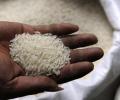
A 6-7 million tonnes shortfall in rice production due to a fall in paddy sowing area is likely to keep rice prices at elevated levels, adding to the inflationary pressure that the slowing economy is already grappling with. Elevated food prices, including that of cereals, had led to retail inflation reversing a three-month declining trend, to touch 7 per cent in August. Similarly, the wholesale price inflation, which declined to 11-month low, also showed price pressures from cereals resulting from wheat output being impacted by severe heat waves in some parts of the country.
"The increase in minimum support price of many crops may keep the food inflation from falling in the current year," said the finance ministry in the mid-year review. MSP, which is determined by the government to protect the farmers' earnings, has increased by 15-40 per cent in the current fiscal for three major categories -- wheat, paddy and coarse grains. The latest hike in MSP announced during this election year is the largest in the last four years.

'It won't be a V-shaped recovery. It'll be consolidation.' 'Investors might exit during that grind. It'll be painful.'

New investors should gradually build a 5 to 10 per cent allocation to gold.

Overall, volume growth is likely to be in the range of 3-8 per cent for two-wheelers and 5-7 per cent for passenger vehicles owing to healthy demand from urban and rural areas and pending order books.
The United Nations' Food and Agriculture Organisation on Wednesday said global commodity prices were far from easing in the short term owing to tight supply-demand situation and warned of flare ups over food shortage.The UN FAO director general said the world has 4-5 million tonnes (MT) of cereals stocks that can feed the global population for only 8-12 weeks.
Consumers are unlikely to get relief from high food prices till December 2012, despite a modest increase in global foodgrain production.

FMCG major Hindustan Unilever on Wednesday reported a 1.53 per cent decline in consolidated net profit to Rs 2,561 crore for the fourth quarter ended March 31, 2024 due to factors such as deflation and softening of commodity prices. The company had posted a net profit of Rs 2,601 crore in the year-ago period, according to a regulatory filing from HUL. Net sales of Hindustan Unilever Ltd (HUL) were almost flat to Rs 15,013 crore in the March quarter.

'The Pakistanis called the US state department and said we agree with India on peace.' 'It was then that US President Donald Trump jumped in and took credit for the ceasefire.'

Petrol price on Sunday was hiked by 50 paise a litre and diesel by 55 paise, taking the total increase in rates since resumption of daily price revision less than a week back to Rs 3.70-3.75 per litre. Petrol in Delhi will now cost Rs 99.11 per litre as against Rs 98.61 previously while diesel rates have gone up from Rs 89.87 per litre to Rs 90.42, according to a price notification of state fuel retailers. Rates have been increased across the country and vary from state to state depending upon the incidence of local taxation.

'Investors looking at the next 6-12 months can be certain that the Fed will maintain its easing cycle, and we expect the overall environment to be conducive for fixed income investments for portfolio diversification.'

Withdrawing a blanket ban on overseas shipments of non-basmati white rice, the government on Saturday imposed a floor price of $490 per tonne and exempted the commodity from export duty. Exports of non-basmati white rice have been banned since July 20, 2023 to boost domestic supply. "The export policy for non-basmati white rice (semi-milled or wholly milled rice, whether or not polished or gazed) ...is amended from prohibited to free, subject to MEP (minimum export price) of $490 per tonne with immediate effect and until further orders," the directorate general of foreign trade (DGFT) said in a notification.

Corporate margins and profits in India remain vulnerable to changes in crude oil prices in the international market. Historical quarterly data from listed companies (excluding banks, finance and insurance, oil and gas, and power sectors) indicate an adverse correlation between corporate margins and crude oil prices.

The July-September quarter (Q2) results for 2024-25 (FY25) from the largest listed consumer electrical solutions companies, Havells India and Polycab India, followed similar trends, demonstrating robust revenue growth while falling short of profitability expectations. Both companies witnessed overall growth in the 16-30 per cent range, but margins declined by 130-290 basis points (bps) year-on-year (Y-o-Y). Although brokerages are bullish on long-term prospects and have raised revenue projections, earnings forecasts have been revised downward due to margin pressures.

In most parts of the landlocked northeastern state, items such as rice, potato, onion and egg besides LPG cylinders and petrol are selling at rates much above the ones fixed by the government.

The RBI's rate-setting panel MPC on Monday began its three-day deliberation amid expectations of another round of hike in benchmark interest rates to contain inflation that continues to remain above the central bank's upper tolerance level. RBI Governor Shaktikanta Das will announce the decision of the Monetary Policy Committee after deliberations on Wednesday. Das has already indicated that there may another hike in the repo rate, though he refrained from quantifying it.

Even as the high inflation figure for October has ruled out any possibility of a rate cut by the Reserve Bank of India's (RBI's) monetary policy committee (MPC) in December, a rate cut in February also looks uncertain due to global uncertainties. Economists told Business Standard that unless domestic growth slows markedly, the outlook on rate cut remains unclear. India's headline inflation touched a 14-month high of 6.2 per cent in October, breaching the MPC's upper tolerance band of 6 per cent.

Reserve Bank of India (RBI) is unlikely to cut the benchmark interest rate at its upcoming monetary policy review meeting, taking place soon after the announcement of the Lok Sabha election results, amid inflation challenges, said experts. The Monetary Policy Committee (MPC) may also refrain from rate cut as economic growth is picking up, notwithstanding the elevated interest rate of 6.5 per cent (repo) prevailing since February 2023. The meeting of the Reserve Bank Governor Shaktikanta Das headed MPC is scheduled for June 5 to 7.

The Supreme Court of India has reserved its verdict on a plea by BJP leader and former Karnataka Chief Minister B S Yediyurappa challenging an order reviving a corruption case against him. The case involves allegations of corruption and criminal conspiracy related to the allocation of industrial land. The court has framed several key legal questions, primarily focusing on the interplay between various provisions of the Prevention of Corruption Act and the Criminal Procedure Code regarding prior sanction to prosecute a public servant. The court has asked Yediyurappa's counsel to file written submissions within two weeks.

Moody's said it expects exposure to low oil prices to shave off 0.8 per cent from real GDP growth on average across oil exporting countries in 2016.
Maruti Suzuki India managing executive officer (production) M M Singh said that although commodity prices had come down, the company was still 'struggling with (high) steel prices.' By 2010, Maruti plans to produce one million units from its two plants at Gurgaon and Manesar in Haryana.

"Profitability of companies will be negatively impacted due to rising input prices, as the ability of companies to pass on these hikes to customers is limited. Further, higher interest rate outlook would lead to lower investment, as profitability margins will be reduced," Crisil Ratings Director Pawan Agrawal said over the conference call.

The economy is likely to log in a tepid 6 per cent growth next fiscal, in line with the consensus estimates, rating agency Crisil said on Thursday. The agency also sees the economy averaging a growth rate of 6.8 per cent over the next five fiscals. Crisil further said it expects the corporate revenue to log in double-digit rise again next fiscal.
